Have you ever walked into your bedroom and looked at your bed in… utter disappointment? Is it because you have a sad, lumpy, deflated blanket topping what *should* be your happy place? Yeah, we're here to fix that. Or more so, explain to you exactly why you might be feeling this way—and how to change it.
You know that scene in movies where someone launches themselves onto a pile of cozy, marshmallow-esque warmth and goodness? Well, to do that, you have to have the right items that make it worth plopping on top of. The fluff that tops your bed is arguably just as important as the mattress or sheets. Which is why it's necessary to take a deep dive into the duvet vs comforter debate.
I know what you're thinking: Um, they both look alike, their names are often used interchangeably (confusing!), and, uh, they both do basically the exact same thing. But, but! There are crucial differences between a duvet and comforter—for better and for worse.
So get cozy, donate that lumpy blanket, and get ready to screenshot every sentence in this article. A lifetime of comfort awaits you, my dear.
What is a duvet?
Often called a comforter (yeah, we warned you. Just bear with us, please), the biggest distinction is that a duvet is designed to be shoved inside a duvet cover. It's quilted and filled with something warm—down or down-alternative feathers, usually—but it's plain and not really meant to be seen, hence the endless options of stylish duvet covers out there in the world I mean, you wouldn't want your bed to tackle the day naked, would you?
Pillowy duvets to rival...everything:
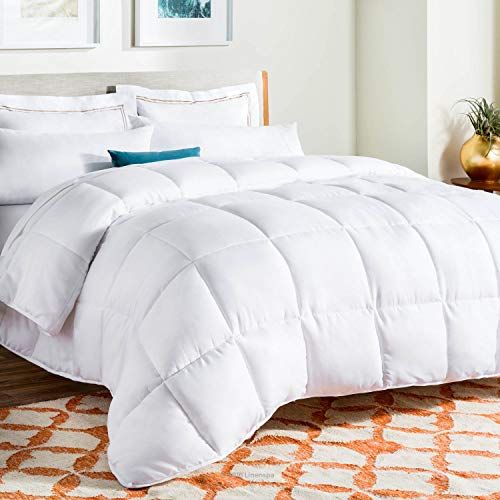
Linenspa Down Alternative Microfiber Comforter
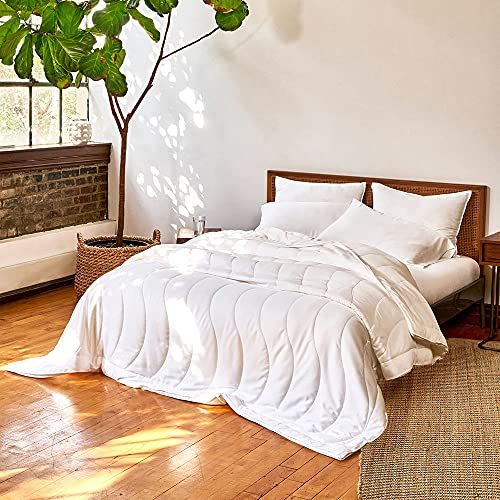
Buffy Buffy Breeze Lightweight Summer Duvet Insert

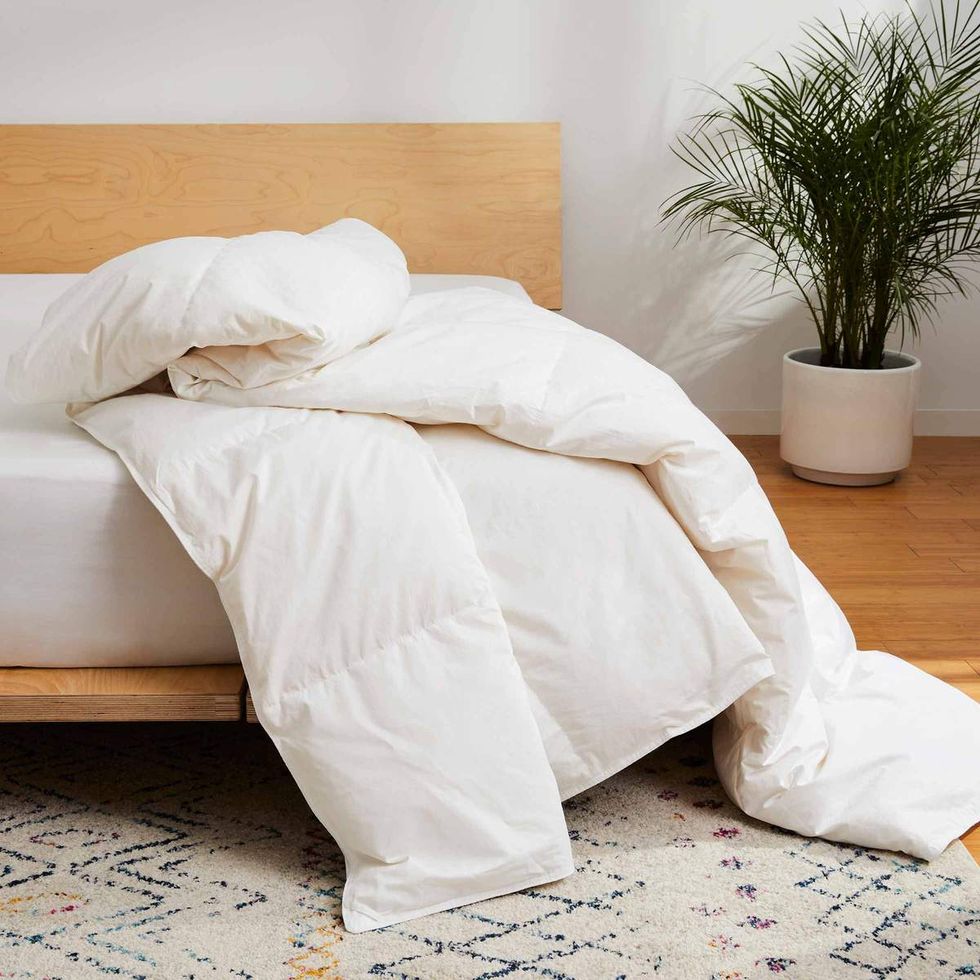
Brooklinen Lightweight Down Comforter

Nest Bedding Nest Bedding Washable Wool Comforter
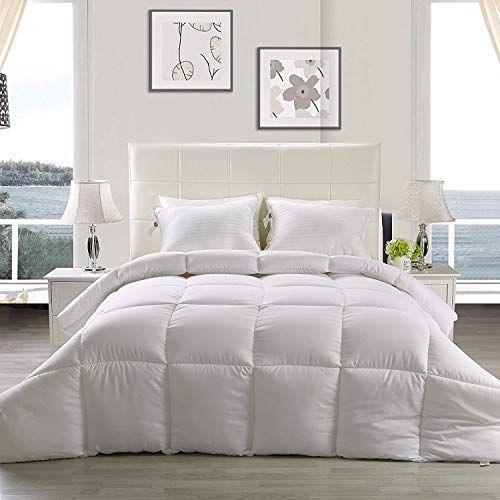
Duvet pros
- They're easy to care for. Because these don't really get dirty (they're tucked away inside your fancy-shmancy cover), you don't have to clean them as frequently. For real, I've been using the same down insert since I was 10. Pro tip: Buy one that you can just pop in the washer/dryer and avoid the dry cleaning bill.
- You can mix it up whenever. A duvet is a smart option if you treat your bed like a mood ring that changes colors every few minutes. Covers can be super inexpensive and are easy to store. So stockpile a bunch, and you'll have an easy swap for your cold-weather and warm-weather moods.
- They're often fluffier than comforters. Since they feature a higher fill power, aka how down duvets are measured, you get a more insulated feel.
- A ton of options exist at various price points. Whether you're on a budget or down to drop a little more cash on an exceptionally great duvet, you'll be pleased to know that the world is your oyster. There are some top-rated under-$100 duvet options out there that'll get the job done, and there are also some higher-end ones that are well worth the investment. TL;DR: The perfect duvet that fits your needs and desired price point is out there.
Duvet cons
- Some expensive duvets can be… really expensive. Let me be real for a second: There are some absurdly ‘spensy duvets out there, and you don’t necessarily need to wreck your bank account for them. Some duvets can cost upwards of $400, and while they might be truly phenom, a duvet that’s more mid-range might just do the trick instead.
- Duvet covers are often sold separately. A lot of sheet sets come with duvet covers, but not all do—meaning you may have to invest in yet another bedding piece if you go this route. Boo.
- Changing. Covers. Is. The. Worst. I know there's the Burrito Method, and like a million other hacks on YouTube… But they require work and will never be as simple as just spreading a comforter out on your bed.
- They don't stay put. Some covers come with ties on the inside corners to keep your duvet in place, but sometimes not even the strongest ones are a match for the dreaded duvet drift. Within a week or two, you might just wake up with the bulk of your bedding lumped toward one side—but it's easily fixed with a hearty shake!
Duvet sizes
Duvets tend to be a bit smaller in size than their comforter counterparts. The measurements will vary a tad based on the brand you go with, but generally, these bad boys hover around these dimensions:
- Twin/Twin XL: 64 inches x 89 inches to 70 inches x 88 inches
- Full/Double: 80 inches x 89 inches to 90 inches x 94 inches
- Queen: 88 inches x 90 inches to 90 inches x 94 inches
- King/Cal King: 104 inches x 90 inches to 108 inches x 94 inches
Now, buy your duvet some clothes:
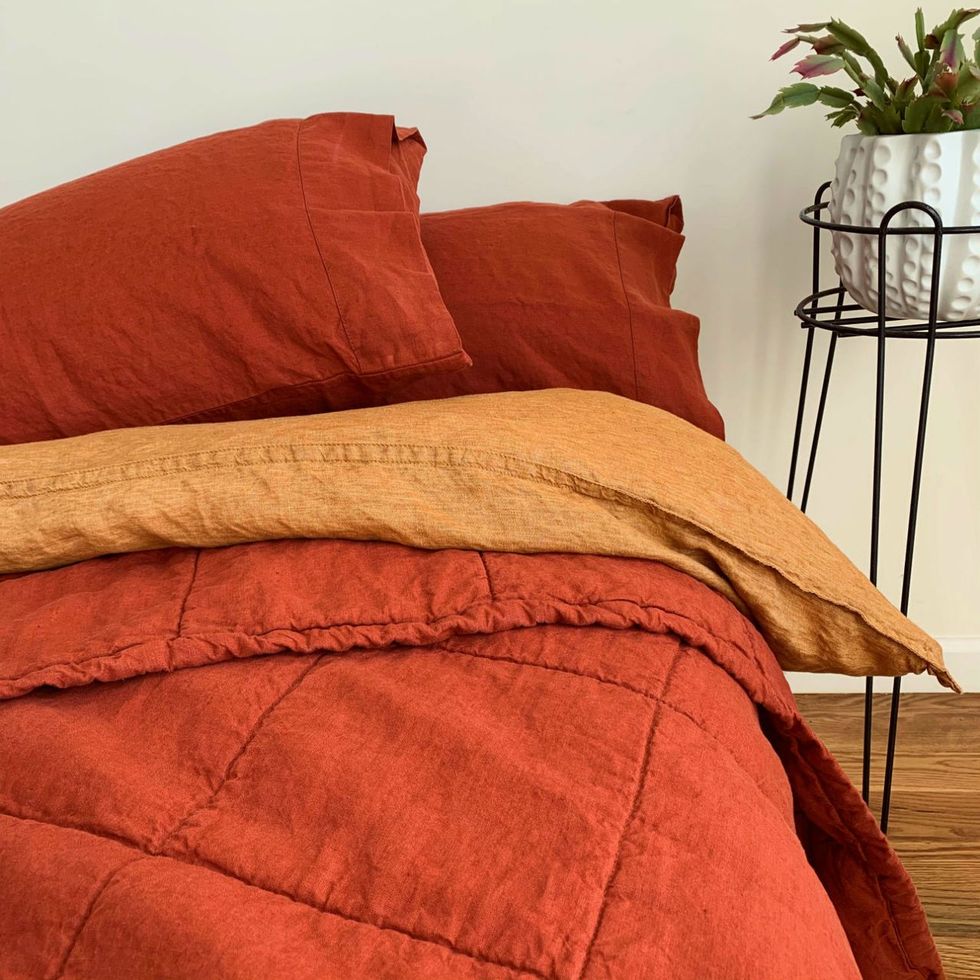
Linoto Linen Duvet Cover


Brooklinen Classic Duvet Cover

Vera Wang Vera Wang Watercolor Floral Cotton Pink Duvet Cover Set, King

What is a comforter?
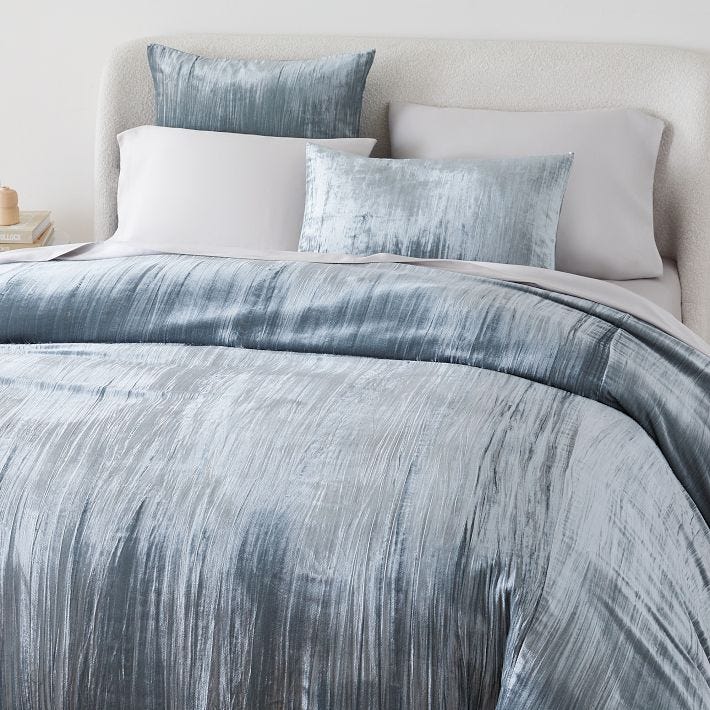
Similar to its cousin, the comforter is a thick, soft, quilted blanket stuffed with filling—but the main feature that sets it apart from a duvet insert is that a comforter doesn’t come with a removable exterior. Typically, a comforter is sold as part of an all-in-one set that includes matching pillow shams, sheets, etc. So, basically, they’re bed toppers for the fashionably lazy who just want an easy and simple option.
Comforter pros
- It's already pretty. No need to buy an additional cover to zhuzh it up, comforters come in tons of cute patterns, prints, and even textures.
- They're often sold in sets. To make your bed dressing even easier, a lot of comforters are sold in sets with coordinating pillows or blankets. Kinda like a chic bed-in-a-box situation.
- They're typically larger in size. Where you mighttttt lack in fluffiness, you do gain in its ability to wrap you up and then some, with it often draping over the mattress and hanging over the side of the bed.
- You won’t have to deal with pesky, hard-to-put-on duvet covers. As you can guess from our sentiments earlier, stuffing a duvet into its cover is a practice straight from Satan himself. This is your way to avoid all of that mess.
Comforter cons
- It's a big design commitment. Considering you can’t swap out the exterior for a different one (the same way you can with a duvet), you’re gonna have to buy a whole ‘nother comforter if you want to switch things up. And I’m just saying… You might get sick of it after spending five minutes on Pinterest.
- It will deflate over time. Like a duvet, the stuffing in your comforter will, eventually, start to wear down. When that happens, it'll need to be replaced. Worst case scenario: Your pattern is sold out everywhere and now you don't have a matching set.
- Your dry cleaning bills may go up. Like a duvet insert, some are machine-washable, but many are dry-clean-only. Unlike a duvet insert, you can't just wash the cover in your machine. If you're known to toss all your shit on your bed when you come home or are generally a clean freak, you might be stuck with an expensive bill from the cleaners.
Comforter sizes
As mentioned, comforters are often larger than similarly-labeled duvets. It's also common for folks to secure a comforter a bit larger than their mattress size, for it to hang off the sides of their bed a bit (I did this, and I adore the look of my bedding because of it). With that in mind, here's the general sizing for comforters:
- Twin/Twin XL: 66 inches x 86 inches to 68 inches x 88 inches
- Full/Double: 81 inches x 86 inches to 84 inches x 88 inches
- Queen: 86 inches x 96 to 88 inches x 100 inches
- King/Cal King: 86 inches x 96 inches to 88 inches X 100 inches
Cozy, dreamy comforters just for you:

PERI HOME Dot Fringe Comforter & Sham Set

Marimekko Marimekko Fokus Comforter & Sham Set

SlumberCloud Lightweight Comforter

Pottery Barn Belgian Flax Linen Comforter & Shams


The Company Store LaCrosse™ Down Comforter
How to decide which is better for you
Before settling on one or the other, consider your lifestyle and what you desire from your bedding. Say you like to redecorate and switch up your room's vibe regularly—the versatility of a duvet and its covers will allow that. Because they don't require constant washes, they're a great fit for those who live a busy (or lazy, no judgment) life. We say go with a comforter if you lack the patience/bedding arsenal to rotate covers all of the time, or if you want a bedscape with a drapier look, since they're larger and longer. You really can't go wrong either way!